Flea Allergy Dermatitis in Dogs: Signs and Treatment

Flea Allergy Dermatitis in Dogs: Signs, Causes, and Treatment
Few things make dogs as miserable as intense itching caused by flea allergy dermatitis. Some dogs may have a few fleas and only scratch a little, while others react so strongly to flea bites that even minimal exposure causes severe skin irritation. These dogs may chew at the tail base, scratch constantly, lose hair, and develop red, inflamed skin very quickly.
Flea allergy dermatitis is not simply a flea infestation. It is an allergic reaction to proteins in flea saliva. When an allergic dog is bitten, the skin can become extremely itchy and inflamed. Because the dog continues to scratch, chew, and lick, secondary skin infections and hot spots often develop.
At Bushnell Animal Clinic, Dr. Roger Hart commonly evaluates dogs with itching, hair loss, hot spots, skin irritation, and allergic skin disease. In Florida, where flea exposure can occur year-round, flea allergy dermatitis is a very important cause of skin problems in dogs.
What Is Flea Allergy Dermatitis?

Flea allergy dermatitis, often shortened to FAD, is an allergic skin disease caused by hypersensitivity to flea saliva. When a flea bites the dog, small amounts of saliva enter the skin. In dogs with flea allergy dermatitis, the immune system overreacts to that saliva, causing itching and inflammation.
This means the dog is not simply itchy because fleas are present. The dog is reacting abnormally to the flea bite itself.
For allergic dogs, just a few flea bites can trigger a major flare-up.
Why Some Dogs React So Strongly to Fleas
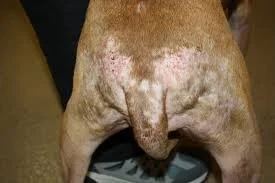
Not every dog bitten by fleas develops flea allergy dermatitis. Some dogs may have fleas and only scratch a little. Others become intensely itchy from very minimal exposure.
The difference is the allergic response. Dogs with flea allergy dermatitis are hypersensitive to flea saliva, so even small flea exposure can lead to:
severe itching
red skin
hair loss
scabs
chewing and licking
hot spots
skin infection
This is why owners do not always see many fleas, or any fleas at all, even though fleas are still the trigger.
Common Signs of Flea Allergy Dermatitis in Dogs
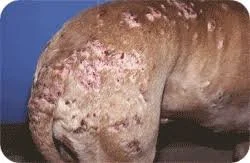
Dogs with flea allergy dermatitis often have a recognizable pattern of itching and skin irritation.
Common signs include:
intense scratching
chewing at the tail base
licking or biting the rear end
hair loss over the lower back or tail base
red inflamed skin
small scabs or crusts
restlessness
hot spots
skin darkening or thickening over time
Some dogs become so uncomfortable that they cannot settle down and seem obsessed with scratching or chewing.
Where Flea Allergy Dermatitis Usually Appears
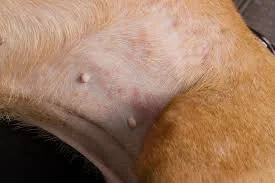
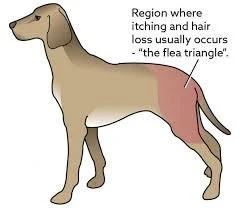
The location of the itching often helps point toward flea allergy dermatitis.
The most common areas affected are:
tail base
lower back
rump
thighs
groin
rear end
Dogs may also lick or chew near the abdomen or sides, but the tail base and rump are classic locations.
If your dog is constantly chewing at the rear half of the body, flea allergy dermatitis should always be considered.
Do You Always See Fleas?
No. This is one of the most confusing parts for owners.
Dogs with flea allergy dermatitis often groom so aggressively that fleas are hard to find. Owners may say:
“I don’t see any fleas.”
“I only saw one flea.”
“The itching seems too severe for just fleas.”
But for allergic dogs, even a small number of bites is enough to create a major reaction.
Sometimes flea dirt may be present even when live fleas are not obvious. Other times the dog has been exposed outdoors or from another pet, and the allergic flare continues after the fleas are no longer easy to spot.
Why Flea Allergy Dermatitis Is So Common in Florida
Florida creates ideal conditions for flea exposure because of:
warm temperatures
humidity
year-round flea survival
outdoor exposure
wildlife and neighborhood animals
That means dogs in Bushnell and surrounding areas may be exposed to fleas much more consistently than dogs in colder climates.
At Bushnell Animal Clinic, flea-related skin disease is an important cause of itching and skin irritation throughout the year, not just during one season.
Hot Spots and Secondary Infections
When dogs with flea allergy dermatitis scratch and chew repeatedly, they often damage the skin badly enough to create secondary problems.
Common complications include:
hot spots
bacterial skin infections
yeast overgrowth
raw moist skin lesions
crusting and scabbing
chronic skin thickening
Some of the skin damage owners notice is not just from the flea bites themselves, but from the dog’s own scratching and chewing.
Internal link suggestion:
Hot Spots in Dogs
Flea Allergy Dermatitis vs. Ordinary Flea Irritation
A dog without flea allergy may scratch some if heavily infested, but a dog with flea allergy dermatitis reacts much more dramatically.
Ordinary flea irritation may cause:
mild scratching
visible fleas
occasional chewing
Flea allergy dermatitis may cause:
extreme itching from few fleas
major skin inflammation
hair loss
chewing at the tail base
hot spots
recurrent skin lesions
The severity of the skin reaction is often much greater than owners expect.
How Dr. Hart Diagnoses Flea Allergy Dermatitis
At Bushnell Animal Clinic, Dr. Roger Hart looks at both the history and the pattern of skin disease.
Diagnosis may involve:
physical examination
flea combing
looking for flea dirt
evaluating the location of itching and hair loss
checking for hot spots or skin infection
reviewing flea prevention history
ruling out other allergic or skin conditions
In many cases, the distribution of the lesions and the history of flea exposure strongly support the diagnosis.
Dogs may also have more than one issue at the same time, such as flea allergy plus environmental allergies or skin infection.
Treatment for Flea Allergy Dermatitis in Dogs
Treatment has two major goals:
relieve the current itching and skin inflammation
eliminate and prevent flea exposure
Flea control
This is the most important part. Effective flea prevention must be used consistently.
Treatment for itching
Dogs often need medication to calm the allergic reaction and reduce inflammation.
Skin infection treatment
If bacterial or yeast infection is present, that must also be treated.
Hot spot treatment
Painful hot spots may need clipping, cleaning, topical care, and sometimes oral medication.
Environmental flea control
In some cases the home and yard environment may also need attention, especially if other pets are involved.
If the fleas are not truly controlled, the problem usually returns.
Why One Missed Month Matters
Owners sometimes ask whether missing one month of flea prevention really makes a difference. For dogs with flea allergy dermatitis, it absolutely can.
Because these dogs react to just a few bites, even a brief lapse in flea prevention can allow a flare-up to occur.
That is why year-round consistency matters so much, especially in Florida.
Can Indoor Dogs Get Flea Allergy Dermatitis?
Yes. Indoor dogs are not immune to flea exposure.
Fleas can be brought into the home by:
other pets
people’s clothing
outdoor exposure during walks
wildlife near the house
Some owners assume an indoor dog cannot have fleas, but that is not always true.
Can Cats or Other Pets Contribute?
Yes. If there are other animals in the home, they may serve as a source of flea exposure even if they do not seem very itchy.
For true control, all pets in the household often need consistent flea prevention.
Otherwise, one pet may keep reintroducing fleas and preventing the allergic dog from improving.
How Long Does It Take to Improve?
Once effective treatment begins, many dogs start to feel better fairly quickly. However, full skin healing may take longer depending on:
how severe the itching has been
whether hot spots or infection are present
how long the flare has been going on
whether flea exposure is fully controlled
The dog may stop itching before the skin is fully healed, but continued prevention is still critical.
How to Help Prevent Flea Allergy Dermatitis
Prevention is centered on strict flea control.
Important steps include:
use year-round flea prevention
treat all pets in the household
avoid lapses in prevention
respond quickly to renewed itching
monitor the tail base and rear end for early irritation
In allergic dogs, prevention is much easier than treating repeated flare-ups.
When to See the Veterinarian
You should schedule an exam if your dog has:
intense itching
chewing at the tail base
hair loss over the rump or lower back
hot spots
red or inflamed skin
scabs or crusting
repeated seasonal or year-round flare-ups
poor response to over-the-counter flea products
Dr. Roger Hart and the team at Bushnell Animal Clinic help dogs with flea allergy dermatitis, itching, skin irritation, hot spots, and recurring allergic skin disease find relief and a long-term management plan.
Conclusion
Flea allergy dermatitis is one of the most common causes of severe itching in dogs, especially in warm climates like Florida. Dogs with this condition are allergic to flea saliva, which means even a few bites can lead to major skin irritation.
If your dog is chewing at the tail base, scratching constantly, or losing hair over the rear end, flea allergy dermatitis is an important possibility. Because the skin can quickly become infected or develop hot spots, early diagnosis and treatment matter.
At Bushnell Animal Clinic, Dr. Roger Hart provides compassionate care for dogs with itching, flea allergy dermatitis, skin infections, and allergy-related skin disease. Consistent flea control and proper treatment can make a major difference in comfort and quality of life.
FAQs
What is flea allergy dermatitis in dogs?
Flea allergy dermatitis is an allergic reaction to flea saliva. Dogs with this condition become very itchy from flea bites, even if only a few fleas are present.
What does flea allergy dermatitis look like?
It often causes itching, hair loss, redness, chewing, and scabs, especially near the tail base, lower back, and rear end.
Can my dog have flea allergy if I don’t see fleas?
Yes. Many allergic dogs groom so intensely that fleas are difficult to find. Even a few bites can trigger a severe reaction.
Where do dogs itch with flea allergy dermatitis?
The most common areas are the tail base, rump, lower back, thighs, and rear end.
Can fleas cause hot spots?
Yes. Flea allergy dermatitis is a very common trigger for hot spots in dogs.
Do indoor dogs need flea prevention?
Yes. Indoor dogs can still be exposed to fleas and can still develop flea allergy dermatitis.
Why does my dog keep chewing near the tail?
Chewing at the tail base is a classic sign of flea allergy dermatitis, although other skin problems can also cause it.
How do you treat flea allergy dermatitis in dogs?
Treatment usually includes strict flea control, itch relief, and treatment of any hot spots or skin infections that have developed.
Internal Links
Why Is My Dog Itching So Much?
Hot Spots in Dogs
Why Is My Dog Scooting?
Why Is My Dog Licking Its Paws?
Dog Ear Infection: Signs, Causes, and Treatment
Why Is My Dog Shaking Its Head?
Anal Gland Abscess in Dog
