Canine Papilloma in Dogs: Causes, Symptoms, and Treatment
Understanding Canine Papilloma in Dogs: Causes, Symptoms, and Treatment
By Dr. Roger Hart – Bushnell Animal Clinic
Discovering unusual growths on your dog’s skin or inside their mouth can be alarming for any pet owner. One condition that commonly causes wart-like growths in dogs is canine papilloma, also known as canine viral papillomatosis. These growths may look concerning, but they are usually benign and often resolve on their own.
At Bushnell Animal Clinic, Dr. Roger Hart frequently evaluates skin lumps, bumps, and oral growths in dogs. Understanding what canine papillomas are and how they develop can help pet owners feel more confident when caring for their pets.
This guide explains the causes, symptoms, diagnosis, and treatment options for canine papillomas.
What Is a Canine Papilloma?
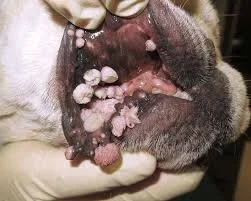
A canine papilloma is a wart-like growth caused by the canine papillomavirus. The virus infects the skin or mucous membranes, leading to the formation of small benign tumors.
These growths often appear as:
Small, cauliflower-like warts
Rough or irregular bumps
Clusters of growths in one area
Papillomas most commonly develop in the mouth, lips, eyelids, and face, although they can also appear on the skin.
The condition is especially common in young dogs and puppies, whose immune systems are still developing.
What Causes Canine Papillomas?
Canine papillomas are caused by infection with the canine papillomavirus, which spreads through direct contact between dogs.
Dogs can become infected by:
Playing with infected dogs
Sharing toys or water bowls
Contact with contaminated surfaces
The virus enters the body through small breaks in the skin or mucous membranes.
Because the virus spreads through contact, it is most commonly seen in places where dogs interact frequently, such as:
Dog parks
Boarding facilities
Grooming salons
Training classes
Which Dogs Are Most at Risk?
Certain dogs are more likely to develop papillomas.
Puppies and Young Dogs
Puppies under two years old are the most commonly affected. Their immune systems are still developing, making them more susceptible to viral infections.
Dogs with Weakened Immune Systems
Older dogs or dogs with underlying medical conditions may also develop papillomas.
Dogs in Social Environments
Dogs that spend time in boarding facilities or dog parks have greater exposure to the virus.
What Do Canine Papillomas Look Like?
Papillomas often have a distinct appearance that helps veterinarians recognize them.
Typical characteristics include:
Small raised growths
Rough, irregular surfaces
White, gray, or pink color
Cauliflower-like texture
In some cases, multiple warts may appear together in clusters.
When papillomas occur inside the mouth, they may grow on:
The lips
The gums
The tongue
The roof of the mouth
Most papillomas remain small, but some may grow larger over time.
Symptoms of Canine Papilloma
Many dogs with papillomas show no symptoms other than the visible growths. However, depending on their location and size, papillomas may cause additional signs.
Possible symptoms include:
Visible warts or bumps
Bad breath
Drooling
Difficulty chewing
Bleeding from irritated warts
If papillomas develop in the mouth, dogs may occasionally experience discomfort when eating.
Are Canine Papillomas Dangerous?
In most cases, canine papillomas are benign and not dangerous. The immune system typically recognizes the virus and eliminates the growths within several weeks or months.
For many dogs, the warts gradually shrink and disappear without treatment.
However, veterinary evaluation is still important because:
Some tumors can resemble papillomas
Large warts may cause irritation
Rare complications may occur
How Veterinarians Diagnose Canine Papillomas
At Bushnell Animal Clinic, diagnosing papillomas usually begins with a thorough physical examination.
Physical Examination
Veterinarians can often recognize papillomas based on their appearance and location.
Biopsy
If the growth has an unusual appearance, a biopsy may be recommended. This involves removing a small tissue sample for laboratory analysis.
Fine Needle Aspirate
In some cases, a fine needle aspirate may be performed to examine cells under a microscope.
These diagnostic tools help confirm the diagnosis and rule out more serious conditions.
Do Canine Papillomas Need Treatment?
Many papillomas do not require treatment. In young dogs especially, the immune system often eliminates the virus within one to five months.
However, treatment may be recommended if:
Warts grow very large
The dog has difficulty eating
The growths become infected
Papillomas persist for several months
Treatment Options for Canine Papillomas
When treatment is necessary, several options may be considered.
Surgical Removal
Large or irritating papillomas may be surgically removed.
Cryotherapy
This treatment freezes the wart tissue, causing it to fall off.
Laser Removal
Some papillomas can be removed using laser therapy.
Immune Support
In many cases, improving the dog’s immune response allows the body to eliminate the virus naturally.
Your veterinarian will determine the most appropriate treatment based on the individual dog.
Can Canine Papillomas Spread to Other Dogs?
Yes. Canine papillomavirus is contagious among dogs, particularly through direct contact.
However, the virus is species-specific, meaning it cannot spread to humans or other animals.
To prevent transmission:
Avoid close contact between infected dogs and other dogs
Do not share toys or food bowls
Wait until warts resolve before visiting dog parks
How Long Do Papillomas Last?
Most papillomas disappear within one to five months as the immune system clears the virus.
Once a dog recovers, they usually develop immunity to that strain of the virus, making reinfection unlikely.
Preventing Canine Papillomas
While it is difficult to completely prevent exposure to papillomavirus, certain steps may reduce risk.
Helpful prevention strategies include:
Maintaining strong immune health
Avoiding contact with infected dogs
Keeping grooming tools clean
Monitoring your dog for new growths
Routine veterinary care also helps detect skin issues early.
When Should You See a Veterinarian?
You should schedule a veterinary visit if your dog develops:
Rapidly growing warts
Bleeding growths
Painful lesions
Difficulty eating
Warts that persist longer than several months
Early evaluation helps ensure the growths are benign and receive proper care if needed.
Veterinary Care at Bushnell Animal Clinic
At Bushnell Animal Clinic, Dr. Roger Hart provides comprehensive care for dogs with skin conditions, lumps, and oral growths.
Services include:
Skin and oral examinations
Lump and growth evaluation
Diagnostic testing
Surgical removal of masses
Preventive care and wellness exams
The goal is to ensure pets remain healthy and comfortable throughout their lives.
Final Thoughts
Canine papillomas are a common cause of wart-like growths in dogs, particularly in puppies and young dogs. Although they may look concerning, most papillomas are benign and temporary.
Still, any new lump or growth should be evaluated by a veterinarian to ensure an accurate diagnosis.
If you notice unusual growths on your dog’s skin or inside the mouth, schedule an exam with Dr. Roger Hart at Bushnell Animal Clinic. Early evaluation provides peace of mind and helps ensure the best care for your pet. 🐾
Frequently Asked Questions About Canine Papilloma
What is canine papilloma?
Canine papilloma is a benign viral growth caused by the canine papillomavirus. It often appears as wart-like growths around a dog’s mouth, lips, eyes, or skin.
Are canine papillomas contagious?
Yes. Canine papillomas are contagious between dogs. The virus spreads through direct contact with infected dogs or contaminated objects such as toys, bowls, or bedding.
What do canine papillomas look like?
Papillomas usually appear as small, cauliflower-like warts. They may be white, pink, or gray and commonly occur around the mouth or face.
Are canine papillomas dangerous?
Most canine papillomas are benign and not dangerous. However, they can become irritated, bleed, or become infected, especially if located in the mouth.
Do canine papillomas go away on their own?
Yes. In many cases papillomas disappear on their own within 1 to 5 months as the dog’s immune system clears the virus.
Do papillomas need to be removed?
Treatment is not always necessary. A veterinarian may recommend removal if the papillomas are painful, bleeding, infected, or interfering with eating.
Which dogs are most likely to get papillomas?
Papillomas are most common in young dogs with immature immune systems and in dogs with weakened immunity.
Can humans get canine papilloma virus?
No. The canine papillomavirus does not infect humans. It only spreads between dogs.
When should I take my dog to the veterinarian for papillomas?
You should see a veterinarian if the growths are bleeding, rapidly increasing in size, causing pain, or interfering with eating.
How can canine papillomas be prevented?
Preventing contact with infected dogs and maintaining good hygiene with shared toys or bowls may reduce the risk of infection.
Related Dog Health Articles
You may also find these veterinary articles helpful:
• Dog Abscess
• Dog Lump Under Skin
• Dog Sebaceous Cyst
• Lipoma in Dogs
• Dog mammory tumor
• Dog Skin Infection
• Hamartoma in Dogs
• Dog Warts and Skin Growths
• When to Worry About a Lump on Your Dog
• Dog Skin Tumors
