Why Does My Dog Need Bloodwork? What It Shows
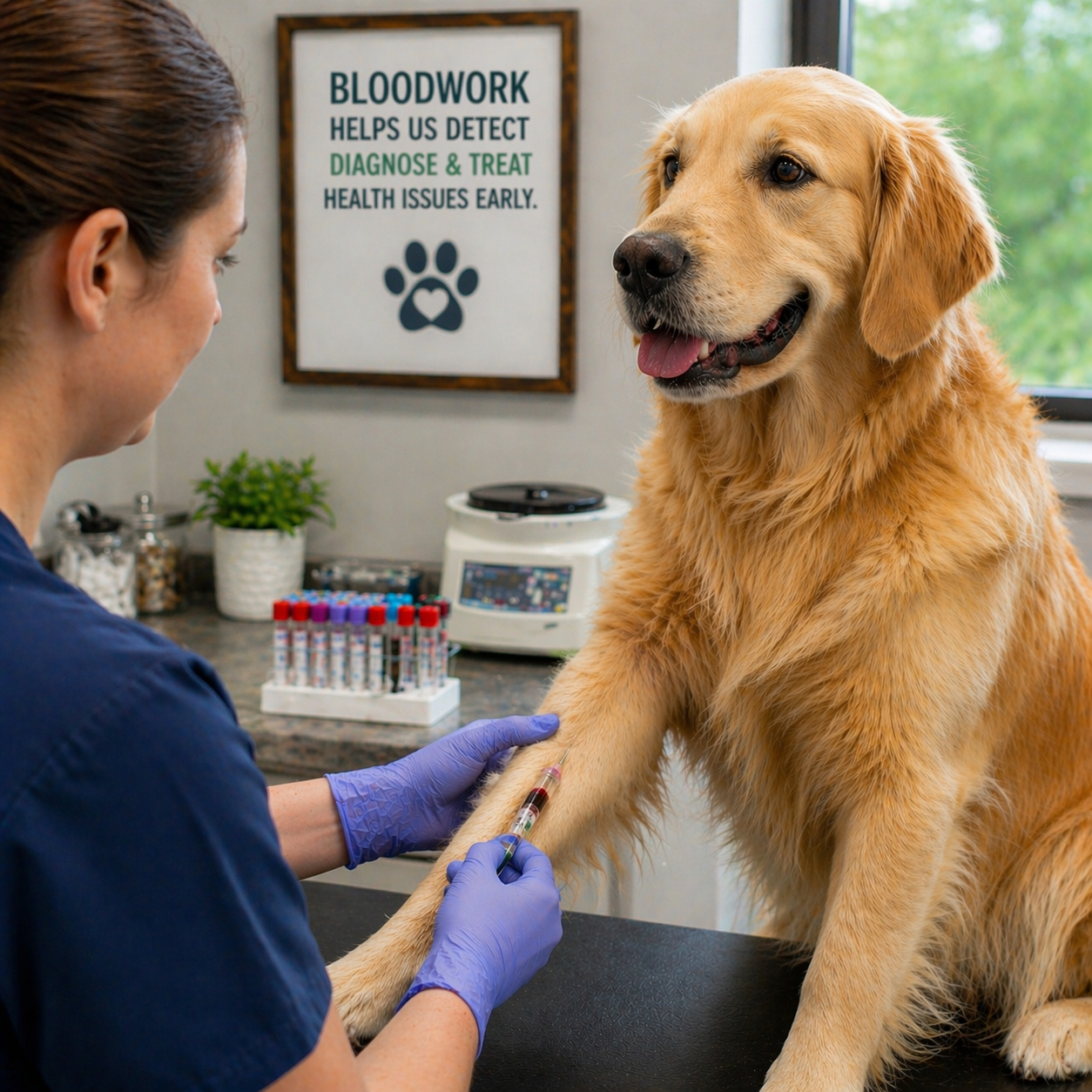
Why Does My Dog Need Bloodwork? What It Shows
If your dog needs bloodwork, it’s normal to wonder why it’s necessary. Sometimes your dog may seem fine, while other times they may be showing symptoms that aren’t fully explained yet. Bloodwork helps us look deeper and understand what’s happening inside the body.
At Bushnell Animal Clinic, bloodwork is one of the most important tools we use to evaluate your dog’s health. It helps us move beyond guesswork and make informed decisions about diagnosis and treatment.
What Bloodwork Actually Looks At
Bloodwork gives us information about how your dog’s organs and systems are functioning. It allows us to detect problems early, sometimes before symptoms become severe.
Common things bloodwork evaluates include:
red blood cells (oxygen and circulation)
white blood cells (infection and inflammation)
kidney function
liver function
blood sugar levels
electrolytes and hydration
Each of these helps build a clearer picture of your dog’s overall health.
Why Bloodwork Is Recommended
Bloodwork is often recommended when symptoms don’t clearly point to one specific issue. It helps narrow down possibilities and guide the next steps.
You may hear us recommend bloodwork if your dog has:
vomiting or diarrhea
not eating normally
weight loss
increased drinking or urination
low energy or weakness
These symptoms can have many causes, and bloodwork helps identify what’s most likely.
This is often part of a Sick Pet Visits evaluation so we can better understand what your dog is experiencing.
When Symptoms Don’t Make Sense
Sometimes symptoms are mild or inconsistent. A dog may seem off but not clearly sick. In these situations, bloodwork can reveal underlying issues that are not obvious during a physical exam.
For example, a dog with low energy may have:
early kidney disease
infection
metabolic imbalance
Without testing, these problems can be difficult to identify early.
Bloodwork for Ongoing or Chronic Issues
If your dog has ongoing symptoms or recurring problems, bloodwork becomes even more important. It helps track changes over time and monitor how the body is responding.
This is especially important for:
chronic vomiting or diarrhea
long-term weight loss
endocrine conditions
senior dogs
In these cases, bloodwork is often part of Internal Medicine & Advanced Diagnostics to guide long-term care.
What Happens After Bloodwork
Once results are available, we use them to guide the next step. Sometimes results are normal, which helps rule out serious problems. Other times, they point us toward a specific diagnosis or additional testing.
Next steps may include:
treatment based on results
additional testing or imaging
monitoring over time
Bloodwork helps us move forward with a clearer plan instead of guessing.
Why Early Testing Matters
Early testing allows us to catch problems sooner. Many medical conditions are easier to treat when identified early, before they become advanced.
Waiting too long can allow issues to progress, making treatment more complicated. Bloodwork helps us act sooner and more effectively.
Local Considerations in Bushnell
In Bushnell and surrounding areas, environmental factors can affect your dog’s health. Parasites, heat, and outdoor exposure can all contribute to illness. Bloodwork helps detect these issues early and guide treatment.
How Bloodwork Connects to Other Symptoms
Bloodwork is often used alongside symptoms to understand the full picture. If your dog is also showing changes in appetite, vomiting, or drinking more water, those patterns matter.
You may also want to learn more about:
These symptoms are often connected and help guide diagnosis.
Final Thoughts
Bloodwork is not just a routine test. It’s one of the most important tools we have to understand your dog’s health. It helps us identify problems early, guide treatment, and provide better care.
If your dog has symptoms that don’t make sense or isn’t acting normal, bloodwork may be the next step in finding answers.
If Your Dog Needs Bloodwork
If your dog is showing symptoms or you’ve been advised to run testing, call Bushnell Animal Clinic or request an appointment. Getting answers early can make a meaningful difference.
FAQ
Why does my dog need bloodwork if they seem fine?
Some conditions develop before visible symptoms appear. Bloodwork can detect early changes and help prevent more serious problems.
Is bloodwork safe for dogs?
Yes, it is a routine and safe procedure. Only a small amount of blood is needed, and most dogs tolerate it well.
How long does it take to get results?
Some results are available quickly, while others may take a little longer depending on the testing needed.
Can bloodwork diagnose everything?
Bloodwork provides important information, but it is often used along with exams and other tests to reach a diagnosis.
When should bloodwork be done?
It is recommended when symptoms are present, for senior pets, or when evaluating ongoing health concerns.
