Understanding Ruptured Cranial Cruciate Ligament (CCL) in Dogs
Understanding Ruptured Cranial Cruciate Ligament (CCL) in Dogs
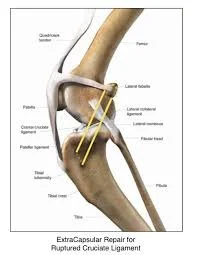
A ruptured cranial cruciate ligament—often called a CCL tear—is one of the most common orthopedic injuries in dogs. Whether your dog suddenly started limping or has been struggling with chronic stiffness, understanding this condition is the first step toward helping them heal. This guide breaks down everything you need to know: causes, symptoms, diagnosis, treatment options, surgery types, recovery timelines, and long‑term care.
🦴 What Is the Cranial Cruciate Ligament (CCL)?
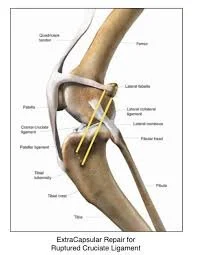
The cranial cruciate ligament is one of the major stabilizing ligaments inside a dog’s knee (stifle) joint. Its job is to prevent the tibia (shin bone) from sliding forward under the femur (thigh bone). When the ligament tears—partially or completely—the knee becomes unstable, painful, and prone to rapid arthritis.
Why this matters
A CCL rupture doesn’t heal on its own. Without proper stabilization, the joint deteriorates quickly, leading to chronic pain and long‑term mobility issues.
🐕 Why Do Dogs Tear Their CCL?
A CCL tear can happen suddenly or develop gradually. The two most common pathways are:
1. Acute Injury
This is more common in young, active dogs. A sudden twist, jump, or sprint can overload the ligament.
2. Degenerative Weakening
In many dogs—especially middle‑aged or overweight ones—the ligament weakens over time. A simple step off the couch can complete the tear.
Breeds at higher risk
Labrador Retrievers
Rottweilers
German Shepherds
Golden Retrievers
Pit Bulls
Bulldogs
A critical fact
About 50% of dogs who tear one CCL will tear the other within 6–12 months.
🐾 Signs Your Dog May Have a CCL Tear
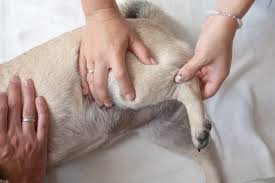
Dogs show CCL injuries in different ways, but the most common symptoms include:
Sudden limping or non‑weight‑bearing on a back leg
Difficulty rising or jumping
Sitting with the injured leg extended outward
Clicking or popping sounds from the knee
Swelling around the knee
Stiffness after rest
Progressive lameness over weeks or months
If your dog is showing any of these signs, a veterinary exam is essential.
🩺 How Veterinarians Diagnose a CCL Rupture
A CCL tear is diagnosed through a combination of physical exam and imaging.
Key diagnostic tests
Cranial drawer test — checks for abnormal forward movement of the tibia
Tibial compression test — evaluates knee stability during flexion
X‑rays — rule out fractures and assess arthritis
Sedation — often needed because tense muscles can mask instability
Your vet may also check for meniscal injury, which commonly occurs alongside CCL tears.
🧩 Meniscal Tears: The Hidden Companion Injury
The medial meniscus, a cartilage pad inside the knee, often tears when the CCL ruptures. This can cause:
Sharp pain
Clicking sounds
Sudden worsening of lameness
During surgery, the meniscus is inspected and damaged portions are removed to prevent ongoing pain.
🛠️ Treatment Options for CCL Ruptures
There are two main paths: surgical repair or conservative management. For most dogs—especially those over 30 lbs—surgery offers the best long‑term outcome.
🏥 Surgical Options for CCL Tears
1. Extracapsular Repair (Lateral Suture Technique)
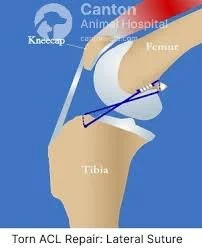
A strong suture is placed outside the joint to mimic the function of the torn ligament.
Best for
Dogs under 45 lbs
Older or less active dogs
Budget‑conscious owners
Pros
Less invasive
Lower cost
Good success rate in small dogs
Cons
Longer recovery
Higher failure rate in large or athletic dogs
2. TPLO (Tibial Plateau Leveling Osteotomy)
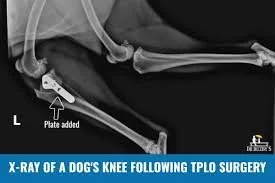
The surgeon cuts and rotates the tibial plateau to change the biomechanics of the knee, eliminating the need for the CCL.
Best for
Medium to large dogs
Athletic or working dogs
Dogs with steep tibial slopes
Pros
Faster return to function
Excellent long‑term stability
Lower risk of re‑injury
Cons
More invasive
Higher cost
Requires specialized training
3. TTA (Tibial Tuberosity Advancement)
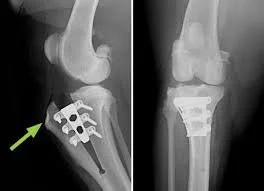
This surgery advances the tibial tuberosity to change the angle of the patellar ligament, stabilizing the knee.
Best for
Medium to large dogs
Dogs with specific knee angles
Pros
Faster early recovery
Strong long‑term outcomes
Cons
Not suitable for all knee shapes
Requires implants
🧪 Is One Surgery Better Than the Others?
Current research shows no definitive long‑term winner among TPLO, TTA, and extracapsular repair. The best choice depends on:
Your dog’s size
Activity level
Knee anatomy
Surgeon’s expertise
Budget
🐶 What If You Don’t Choose Surgery?
Some small dogs (<30 lbs) can do well with conservative management, but large dogs almost always develop:
Chronic pain
Progressive arthritis
Muscle loss
Reduced mobility
Even with rest and medication, the knee remains unstable.
🧊 Conservative Management Options
Strict rest for 8–12 weeks
Anti‑inflammatory medications (prescribed by your vet)
Joint supplements (glucosamine, omega‑3s)
Weight loss
Physical therapy
Knee braces (limited evidence but helpful for some dogs)
This approach may reduce symptoms but rarely restores full function.
🐾 Recovery Timeline After CCL Surgery
Recovery is a marathon, not a sprint. Most dogs need 8–16 weeks of controlled rehabilitation.
Typical recovery milestones
Days 1–7: Ice therapy, pain control, short leash walks
Weeks 2–4: Passive range‑of‑motion exercises, gradual increase in activity
Weeks 4–8: Strength‑building, underwater treadmill if available
Weeks 8–12: Longer walks, controlled strengthening
3–6 months: Return to normal activity
Full recovery varies by dog and surgery type.
🦴 Long‑Term Management & Arthritis Prevention
Even with surgery, arthritis can develop. You can slow it down with:
Maintaining a healthy weight
Daily joint supplements
Regular low‑impact exercise
Physical therapy
Anti‑inflammatory medications as needed
Avoiding high‑impact activities
Dogs who stay lean and active have the best long‑term outcomes.
🐕🦺 Can an Old CCL Injury Still Be Fixed?
Yes. Even if months or years have passed, many dogs still benefit from surgery. Chronic instability leads to arthritis, but stabilizing the knee can significantly improve comfort and mobility.
🧭 Final Thoughts: Helping Your Dog Heal From a CCL Tear
A ruptured cranial cruciate ligament is painful, but with the right treatment plan, most dogs return to happy, active lives. Whether you choose surgery or conservative management, early action makes a huge difference.
📣 Ready to Help Your Dog Recover?
If your dog is limping, stiff, or showing signs of a knee injury, don’t wait. Early diagnosis leads to better outcomes and less long‑term pain.
👉 Schedule a consultation with your veterinarian today to discuss the best treatment plan for your dog.
Your dog deserves to move comfortably again—and you can help make that happen.
I
