Pet Emergency Preparedness in Bushnell, FL and Surrounding Cities
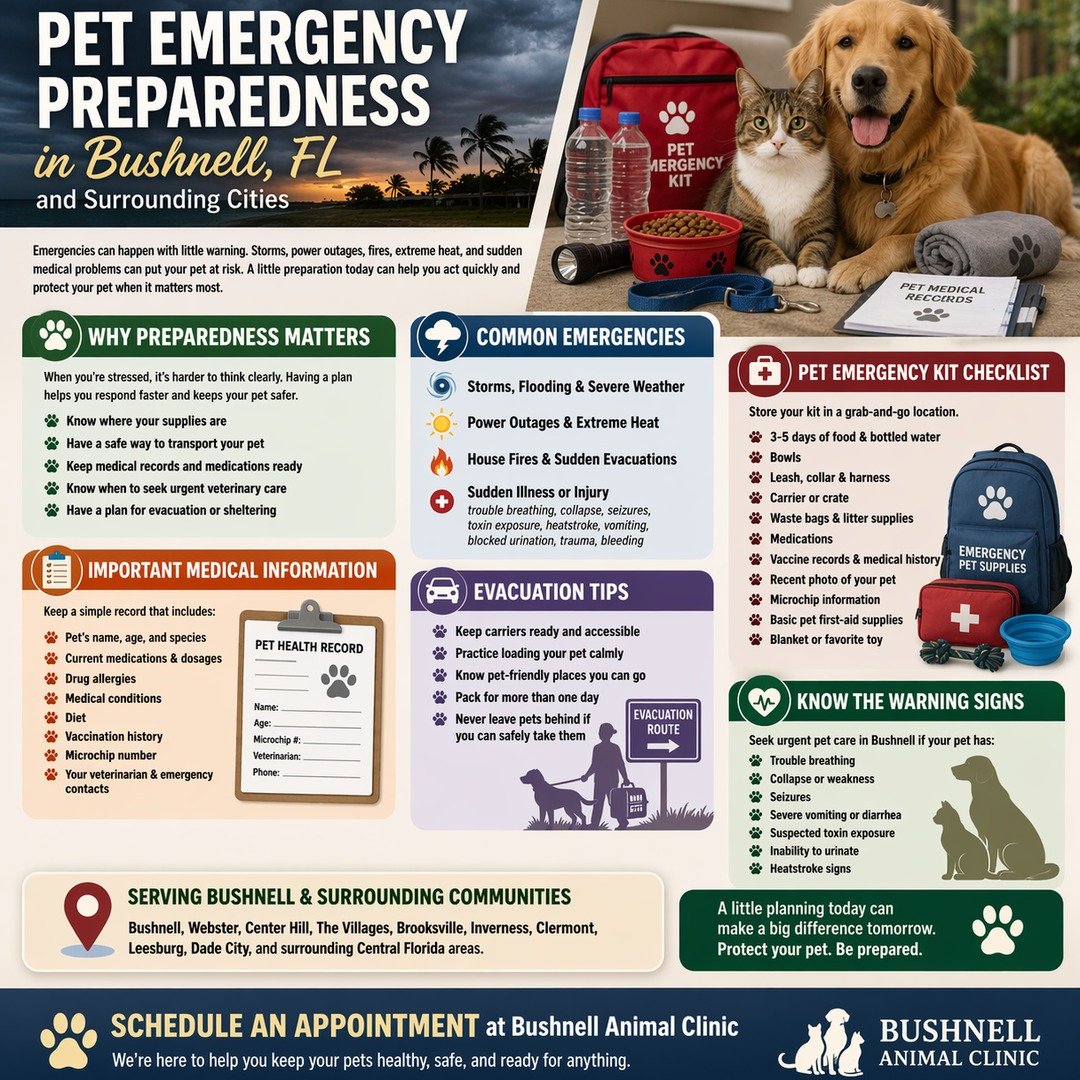
Pet Emergency Preparedness in Bushnell, FL and Surrounding Cities
Emergencies can happen with very little warning. Storms, power outages, evacuations, flooding, extreme heat, house fires, and sudden medical problems can all affect pets just as quickly as they affect people. Having a plan in place before something happens can make a major difference in how safely and calmly you respond.
At Bushnell Animal Clinic, we encourage pet owners in Bushnell, Webster, Center Hill, The Villages, Brooksville, Inverness, Clermont, Leesburg, Dade City, and surrounding Central Florida communities to prepare ahead of time. Merck, Cornell University, and VIN all consistently support the value of early planning, fast recognition of emergencies, and practical home preparedness for pets.
Why Emergency Preparedness Matters for Pets
Many pet emergencies are harder to manage because owners are forced to make decisions under stress. If your pet is injured, overheated, struggling to breathe, or suddenly displaced from home, it helps to already know:
where your supplies are
how you will transport your pet
what records you need
which medications your pet takes
where you will go if you must leave home quickly
when a situation needs immediate veterinary attention
Preparedness is not about expecting the worst every day. It is about making sure you can act quickly and safely if something does happen.
The Most Common Emergency Situations for Pets
In Bushnell and surrounding cities, pet emergency planning should include more than one type of event.
Storms and Severe Weather
Thunderstorms, hurricanes, tornado threats, and flooding can create unsafe conditions quickly. Pets may panic, escape, or become injured during storm preparation or evacuation.
Extreme Heat and Power Outages
Hot Florida weather can become dangerous fast, especially if air conditioning is lost. Senior pets, short-nosed dogs, pets with heart or lung disease, and anxious pets may be affected sooner.
House Fires or Sudden Evacuations
A fast exit plan matters if you have only a few minutes to leave.
Sudden Medical Emergencies
Pets can also have personal emergencies such as:
trouble breathing
collapse
seizures
toxin exposure
heatstroke
severe vomiting or diarrhea
urinary blockage
trauma
bleeding
This is why emergency preparedness should include both disaster planning and medical planning.
What Should Be in a Pet Emergency Kit?
A pet emergency kit should be easy to grab and stored in a known location. Good items to keep ready include:
enough food for several days
bottled water
bowls
leash and collar
harness
carrier or crate
waste bags
litter and litter pan for cats
medications
copies of vaccine records
medical history summary
recent photo of your pet
microchip information
basic first-aid supplies
comfort items such as a blanket or favorite toy
It is also smart to keep your veterinarian’s contact information and the contact information for urgent pet care in Bushnell easy to find.
Important Medical Information to Keep Ready
In an emergency, details are easy to forget. Keep a simple written record that includes:
your pet’s name, age, and species
current medications
drug allergies
medical conditions
diet
vaccination history
microchip number
your primary veterinarian
emergency contact information
If your pet has heart disease, chronic breathing problems, diabetes, seizures, or other ongoing illness, this matters even more. In pets with more complicated health conditions, internal medicine and advanced diagnostics may already be part of their care plan, and having that history ready can save time.
How to Prepare for Evacuation With Pets
If you may need to leave home quickly, plan now instead of waiting until the last minute.
Keep Carriers Ready
Every cat should have an easy-to-reach carrier. Dogs should have a leash, collar, and transport plan ready.
Practice Quick Loading
Pets often hide when they are stressed. Practice getting them into carriers or into the car calmly and quickly.
Know Where Pets Can Go
Not every hotel, shelter, or temporary housing location accepts pets. Have a short list of pet-friendly options ready before an emergency.
Pack for More Than One Day
Do not assume you will be gone for only a few hours.
How to Prepare for Medical Emergencies at Home
You do not need to perform advanced treatment at home, but you should know how to recognize serious signs and act quickly.
Call promptly or seek urgent pet care in Bushnell if your pet has:
trouble breathing
collapse
uncontrolled bleeding
repeated vomiting
severe diarrhea
suspected toxin exposure
seizures
inability to urinate
extreme weakness
heatstroke signs
If your pet is breathing hard, review Why Is My Dog Breathing Hard? or Why Is My Cat Breathing Hard? as part of your symptom-based emergency planning.
Special Planning for Dogs
Dogs may need:
an extra leash
a backup collar with ID
medication list
muzzle if recommended for safety during painful emergencies
a plan for safe transport if large or hard to lift
Large dogs, senior dogs, and dogs with arthritis or weakness may need extra help getting into a vehicle quickly.
Special Planning for Cats
Cats are often harder to catch in a stressful moment. For cats, planning should include:
a carrier that stays accessible
a towel or blanket for safe handling
litter supplies
a secure room plan during storms or evacuation loading
a recent photo in case of escape
Cats with respiratory disease, heart disease, or urinary problems can decline quickly, so having a transport plan matters.
Pets With Chronic Medical Conditions Need Extra Planning
Some pets need more than a basic kit. If your pet already has a known illness, your emergency planning should be more detailed.
This includes pets with:
heart disease
asthma
chronic bronchitis
diabetes
seizure disorders
urinary disease
kidney disease
cancer
mobility problems
Heat, Smoke, and Air Quality Risks
Emergency preparedness is not only about storms. Hot weather, smoke exposure, and poor air quality can all create urgent problems.
Be especially cautious with pets that:
are elderly
are overweight
are short-nosed
have heart disease
have chronic coughing
have breathing trouble
If breathing changes develop, it is better to act early than to wait for obvious distress.
What to Do if You Have to Leave Without Warning
If something happens suddenly:
stay calm
secure your pet first
grab the carrier, leash, and emergency kit
take medications and records
do not leave pets behind if there is any safe way to evacuate them
Fast action is easier when the supplies are already packed.
What to Expect if Your Pet Needs Emergency Evaluation
If your pet needs prompt veterinary care, we may ask:
what happened
when signs started
whether there was toxin exposure
whether your pet has pre-existing illness
what medications your pet takes
whether breathing, urination, appetite, or mobility changed
Depending on the situation, treatment may involve examination, stabilization, imaging, bloodwork, oxygen support, fluid therapy, or referral recommendations.
Serving Bushnell and Surrounding Central Florida Communities
Bushnell Animal Clinic serves dogs and cats in Bushnell, Webster, Center Hill, The Villages, Brooksville, Inverness, Clermont, Leesburg, Dade City, and surrounding Central Florida communities.
We want pet owners to feel more prepared, not more fearful. A good emergency plan can reduce stress and help protect your pet when time matters most.
Schedule an Appointment to Review Your Pet’s Emergency Plan
If your pet has ongoing medical issues, special medication needs, or you want help planning for storms, travel, or evacuation, use schedule an appointment at Bushnell Animal Clinic.
We can help you think through the risks for your individual pet and what supplies or planning steps make the most sense.
FAQ
What should be in a pet emergency kit?
A pet emergency kit should include food, water, bowls, medications, records, leash or carrier, waste supplies, and comfort items.
How many days of food and medication should I keep ready?
It is smart to keep several days of food and medications available in case you need to leave home quickly or services are interrupted.
Should cats have carriers ready at all times?
Yes. Cats are often harder to catch in emergencies, so having a carrier easy to reach is important.
When should I seek emergency veterinary care for my pet?
You should seek prompt care if your pet has trouble breathing, collapses, has severe vomiting or diarrhea, is bleeding, cannot urinate, or is rapidly worsening.
Do pets with chronic diseases need extra emergency planning?
Yes. Pets with heart disease, respiratory disease, diabetes, seizures, urinary problems, and other chronic illnesses need more detailed preparation.
Can my veterinarian help me prepare for emergencies?
Yes. Your veterinarian can help you review medications, records, transport needs, and what warning signs should trigger urgent care.
Pet emergency preparedness helps owners respond faster to storms, power outages, evacuations, and sudden medical problems. Learn practical steps for pets in Bushnell, FL.
