Why Is My Cat Breathing Hard? Common Causes and When to Worry
Why Is My Cat Breathing Hard? Common Causes and When to Worry
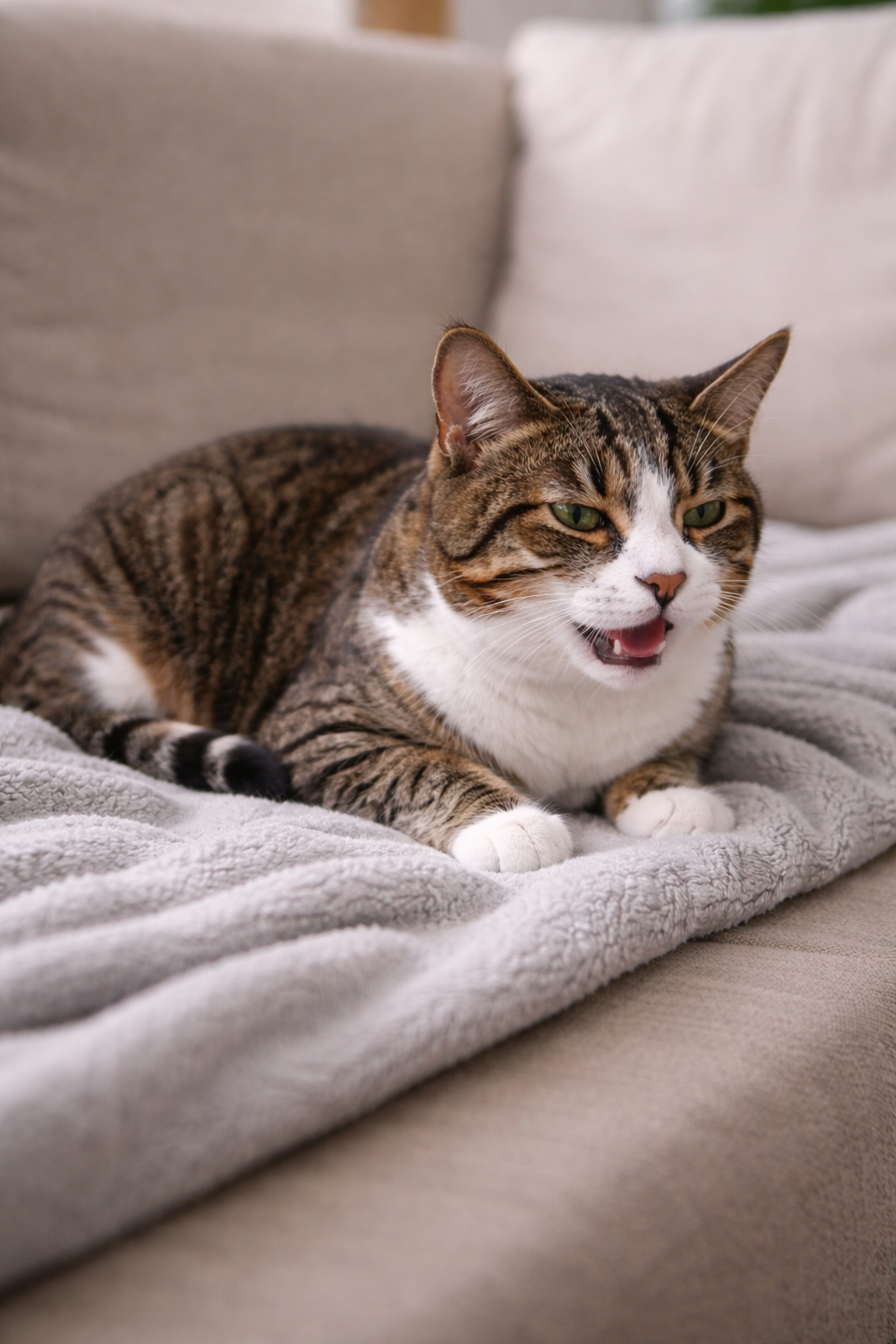
If your cat is breathing hard, it is important to pay attention right away. Cats are very good at hiding illness, and changes in breathing can be one of the clearest signs that something serious is going on. In some cases, hard breathing may happen after stress or overheating, but it can also be linked to asthma, heart disease, pain, lung disease, fluid buildup, or another deeper medical problem.
At Bushnell Animal Clinic, we help cat owners in Bushnell, FL and surrounding Central Florida communities understand when hard breathing may be mild and temporary and when it needs urgent medical attention.
Is Hard Breathing Normal in Cats?
No, not usually. Cats should normally breathe quietly and without obvious effort. If you can clearly see your cat working harder to breathe, something may be wrong.
Hard breathing becomes more concerning when it:
happens at rest
comes with open-mouth breathing
happens with coughing
happens with panting
comes with wheezing
causes your cat to hide
happens with weakness
happens with poor appetite
is getting worse instead of better
That is when it becomes more important to seek help instead of waiting to see if it passes.
What Does Hard Breathing in Cats Look Like?
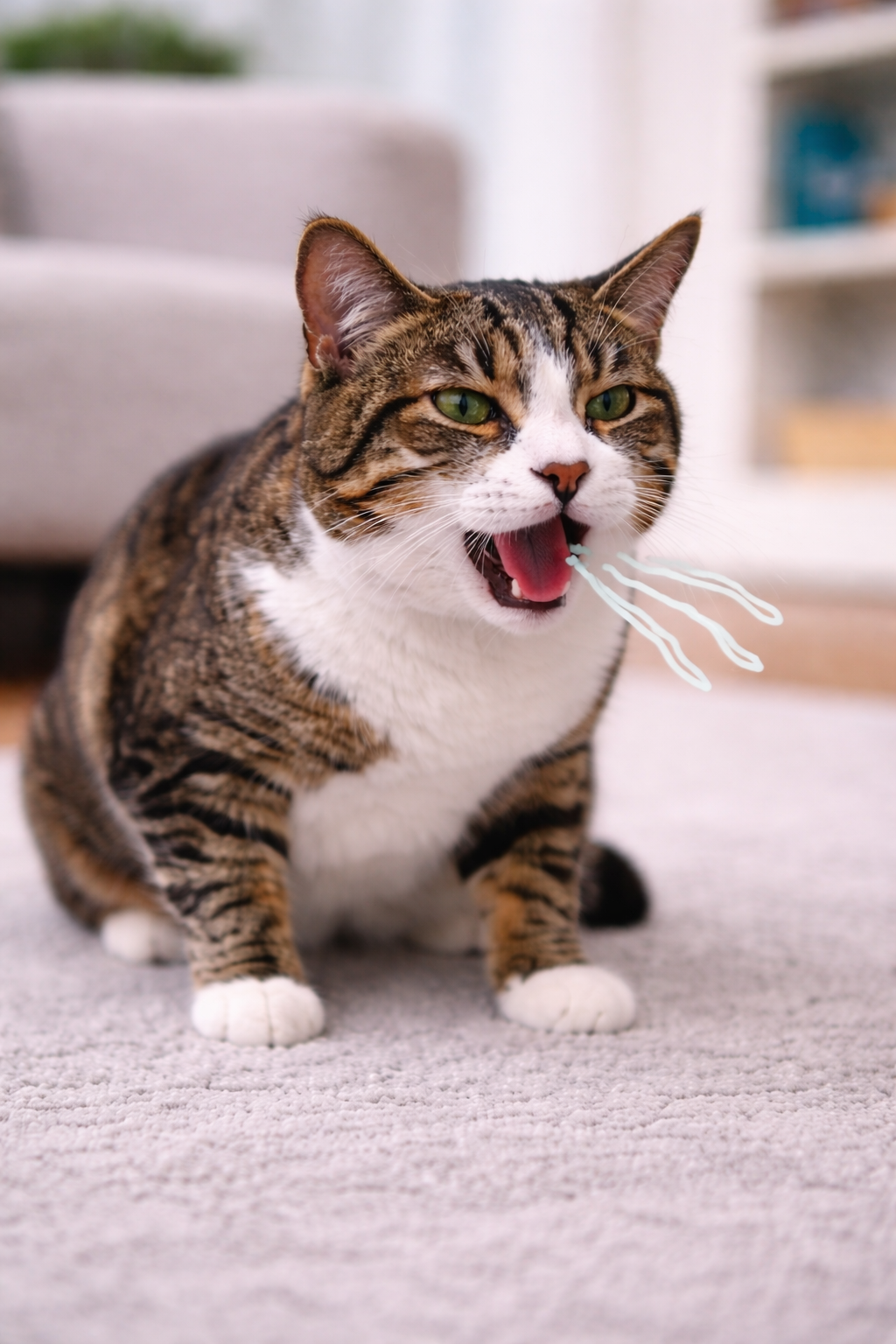
Hard breathing may include:
fast breathing
exaggerated chest movement
breathing with the belly
open-mouth breathing
stretched neck posture
flared nostrils
wheezing
noisy breathing
restlessness
reluctance to lie down
Some cats may also seem scared, weak, or unusually quiet.
Common Causes of Hard Breathing in Cats
Hard breathing is a symptom, not a diagnosis. It can come from the lungs, airways, heart, or other major systems in the body.
Feline Asthma
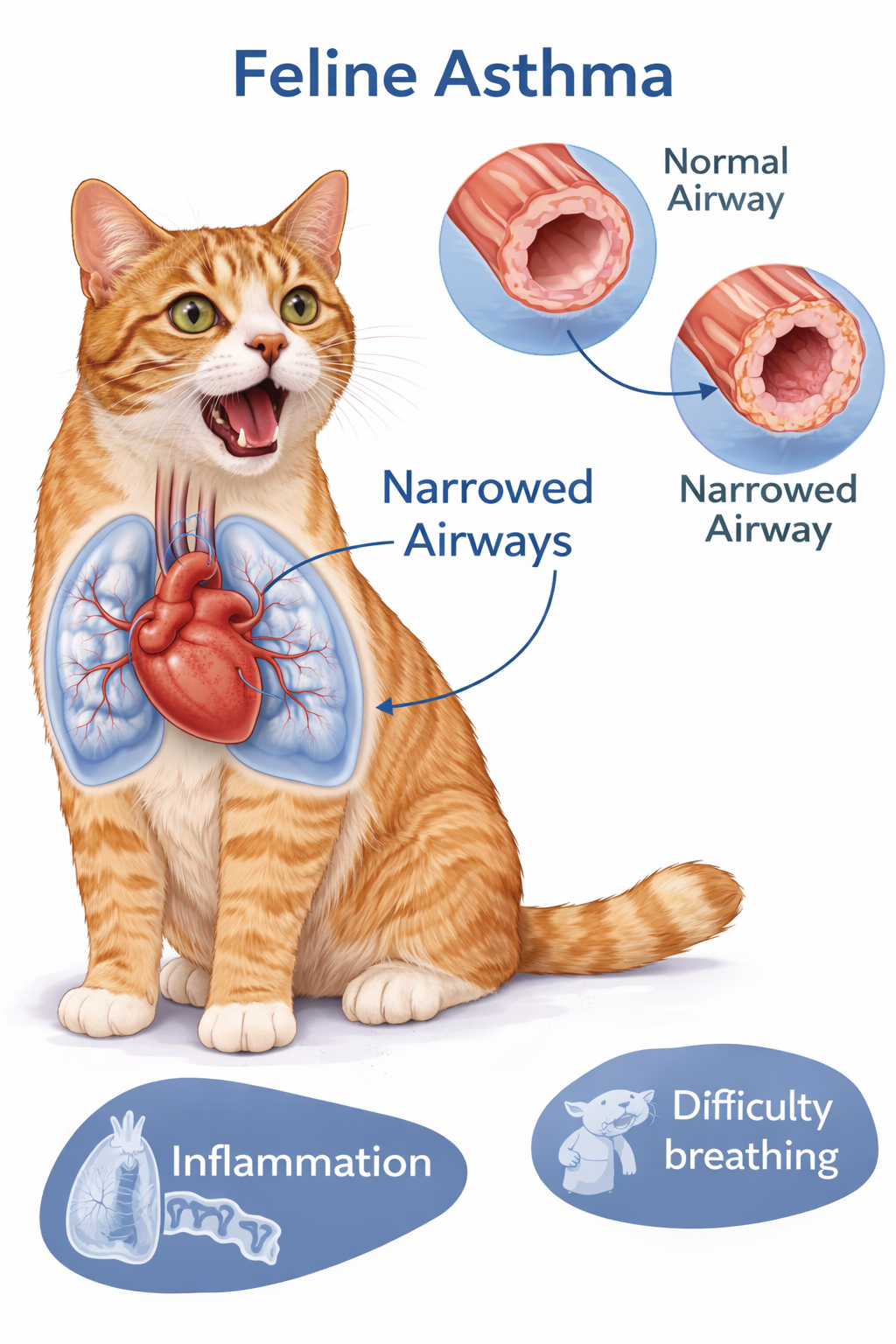
Asthma is a common cause of breathing difficulty in cats. It may cause hard breathing, coughing, wheezing, or repeated respiratory flare-ups. If coughing is also part of the picture, connect readers to Why Is My Cat Coughing?
Heart Disease
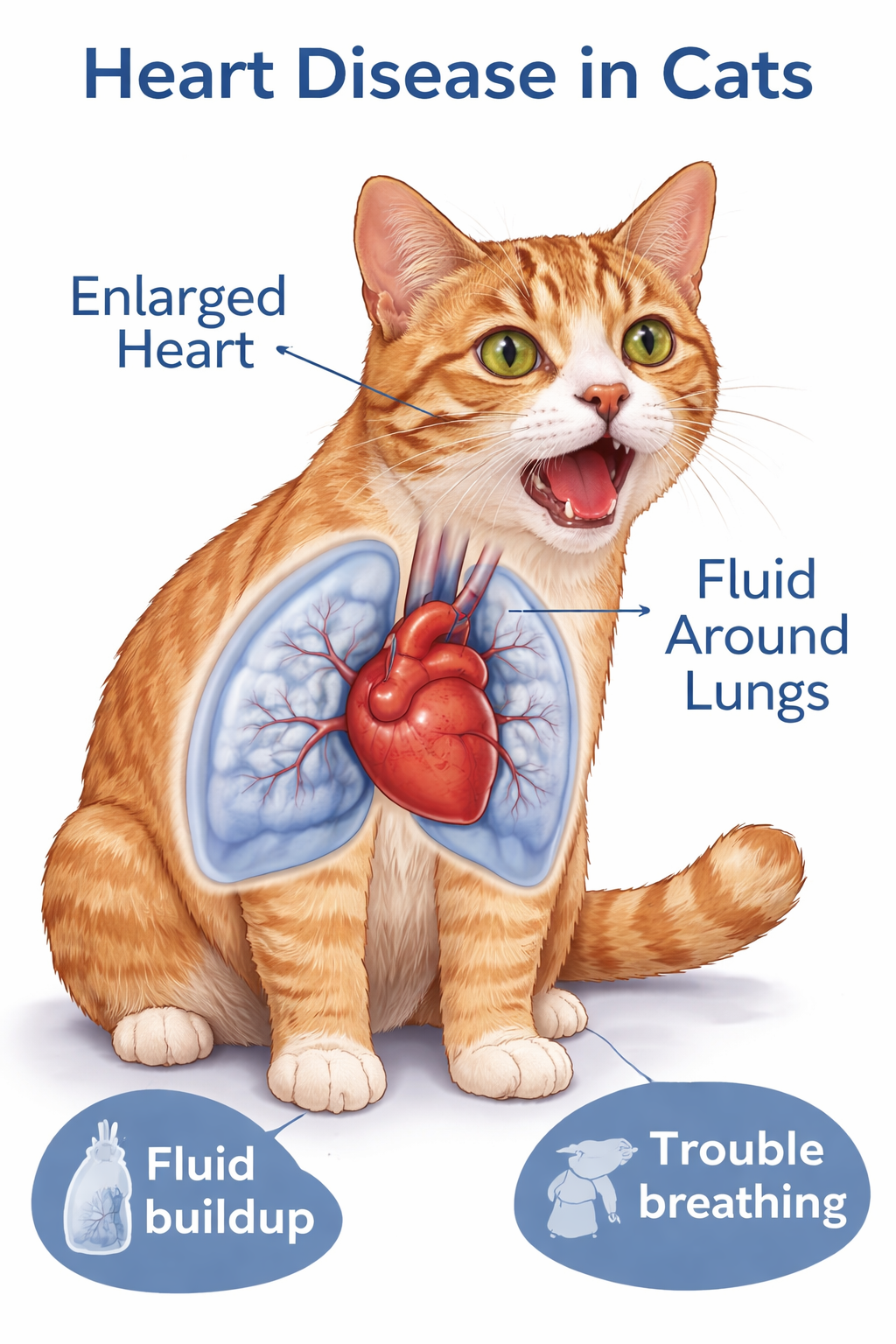
Some cats with heart disease develop breathing changes because of poor circulation, heart enlargement, or fluid buildup. These cats may also seem weak, restless, or less interested in food.
Fluid Around the Lungs or in the Chest
Fluid buildup can make it harder for the lungs to expand normally. This can lead to fast, shallow, or labored breathing and may require urgent care.
Lung Disease
Inflammation, infection, masses, pneumonia, or other lung problems can all make breathing harder than normal.
Pain
Cats in pain may breathe faster or harder, especially if they are also hiding, restless, or unwilling to move normally.
Heat Stress
Cats that become overheated may breathe harder or pant. This is more urgent if the cat cannot cool down quickly.
Anemia
A low red blood cell count can reduce oxygen delivery and cause fast or labored breathing.
Other Internal Medical Problems
Some cats with hard breathing also have low energy, appetite changes, coughing, or weight loss that point to internal medicine and advanced diagnostics.
Why Is My Cat Breathing Hard but Acting Normal?
Some cats may still seem fairly alert at first, especially in the early stages of illness. A cat might still walk around or look at you normally even while working harder to breathe.
But cats that seem mostly normal may still have:
early asthma
heart disease
lung inflammation
pain
heat stress
other internal medical problems
If the breathing change keeps happening, it is still worth taking seriously even if your cat does not seem dramatically sick yet.
Why Is My Cat Breathing Hard and Hiding?
Cats often hide when they do not feel well. If hard breathing is happening with hiding, lower energy, weakness, or appetite changes, the concern level goes up.
This combination may point to:
pain
heart disease
asthma
lung disease
fever
more significant systemic illness
If appetite loss is part of the picture, connect readers to Why Is My Cat Not Eating?
Why Is My Cat Breathing Hard and Panting?
Panting and hard breathing together can be especially important in cats. This may happen with:
overheating
stress
heart disease
asthma
respiratory distress
pain
When Should I Worry About My Cat Breathing Hard?
You should be more concerned if your cat:
is breathing hard at rest
has open-mouth breathing
seems weak
hides more than usual
has pale, blue, or gray gums
stops eating
becomes lethargic
coughs or wheezes
cannot get comfortable
is getting worse quickly
These cases should not be watched too long at home.
When Hard Breathing Becomes an Emergency
Hard breathing can become an emergency very quickly in cats. Seek urgent pet care in Bushnellpromptly if your cat:
is struggling to breathe
has open-mouth breathing that does not stop
has pale, blue, or gray gums
collapses
cannot settle down
seems extremely weak
is worsening quickly
Cats in respiratory distress may decline fast, so prompt evaluation matters.
When Hard Breathing Needs an Internal Medicine Approach
Some breathing changes are brief and stress-related. Others are part of a bigger pattern that needs deeper evaluation.
A cat with repeated or unexplained hard breathing may also have:
coughing
panting
low energy
poor appetite
weight loss
abnormal heart or lung sounds
recurring breathing changes
That is when internal medicine and advanced diagnosticsbecomes especially important. At Bushnell Animal Clinic, that may include a full history, physical exam, imaging, lab work, and a more targeted plan based on your cat’s symptoms.
What to Expect at the Vet for a Cat Breathing Hard
When you bring your cat in for hard breathing, we want to know:
when the breathing change started
whether it happens at rest
whether there was a stressful event
whether coughing or wheezing is happening
whether appetite has changed
whether your cat has been in a hot environment
whether the problem has happened before
whether there is any history of heart or respiratory disease
Depending on the findings, your veterinarian may recommend:
physical examination
breathing assessment
chest auscultation
imaging such as X-rays
bloodwork
additional diagnostics depending on the case
The goal is to determine whether the hard breathing is mild and temporary or a sign of a more serious medical problem.
Serving Bushnell and Surrounding Central Florida Communities
Bushnell Animal Clinic serves cats and cat owners in Bushnell, Webster, Center Hill, The Villages, Brooksville, Inverness, Clermont, Leesburg, Dade City, and surrounding Central Florida communities.
If your cat is breathing hard, breathing faster than normal, or showing other changes at home, we are here to help.
Schedule an Appointment for a Cat Breathing Hard in Bushnell, FL
If your cat is breathing hard and it is not improving, is happening at rest, or is causing concern at home, use schedule an appointment at Bushnell Animal Clinic.
We can help determine whether your cat has mild temporary breathing changes or a deeper medical problem that needs further evaluation.
FAQ
Why is my cat breathing hard?
Cats may breathe hard because of asthma, heart disease, lung disease, pain, heat stress, anemia, or other medical problems.
Is hard breathing normal in cats?
No. Cats should normally breathe quietly and without visible effort, so hard breathing usually deserves attention.
When should I worry about my cat breathing hard?
You should worry more if the breathing happens at rest, comes with open-mouth breathing, weakness, poor appetite, pale gums, or is getting worse.
Is hard breathing in cats an emergency?
It can be. Hard breathing becomes especially urgent if your cat is struggling to breathe, has blue or pale gums, collapses, or cannot get comfortable.
Can heart disease cause hard breathing in cats?
Yes. Heart disease can lead to breathing changes in cats, especially if there is poor circulation or fluid buildup.
Should I take my cat to the vet for hard breathing?
If your cat is breathing hard, especially at rest or with other symptoms, a veterinary visit is a good idea.
